Back to List
HELIOS
Harvesting Energy with Lightweight Integrated Origami Structure
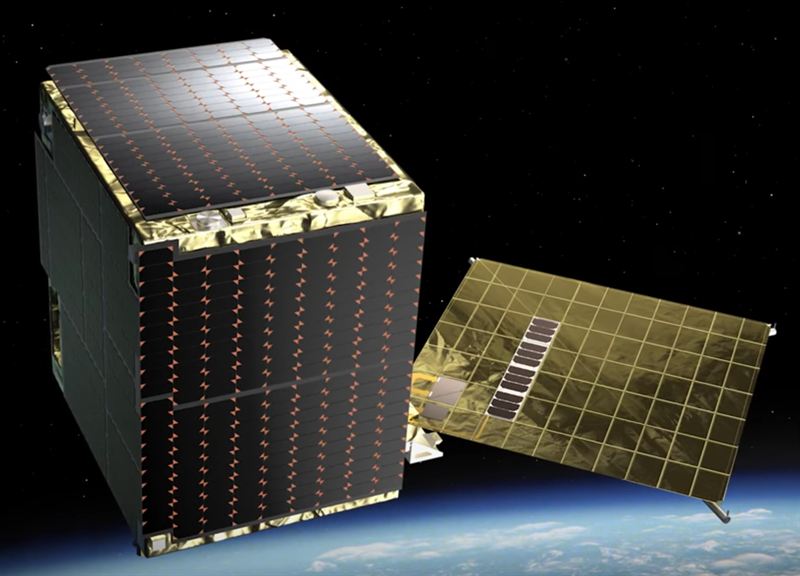
発電・アンテナ機能を有する軽量膜展開構造物(HELIOS)を本研究室主導で研究開発し,2022年度から軌道上実証実験を予定していましたが,軌道投入できませんでした.その再挑戦であるHELIOS-Rが2025年度から軌道上実証実験を予定しています.
The lightweight membrane deployable structure HELIOS, which integrates power generation and antenna functions, has been developed under the leadership of our laboratory. Although an on-orbit demonstration was originally planned to begin in FY2022, the mission was unable to reach orbit. HELIOS-R, the follow-on attempt, is scheduled for an on-orbit demonstration starting in FY2025.
Mission Brief
発電・アンテナ機能を有する軽量膜展開構造物(HELIOS)を本研究室主導で研究開発し,2022年度から軌道上実証実験を予定していました.
この技術実証により,
- 小型衛星の高機能化・多機能化
(大電力発電/大容量通信/高分解能観測) - 小型衛星群による通信/観測網の高度化
(ビッグデータ・AIを使う情報社会化) - 小型衛星による深宇宙探査の実現
ミッションとしては,
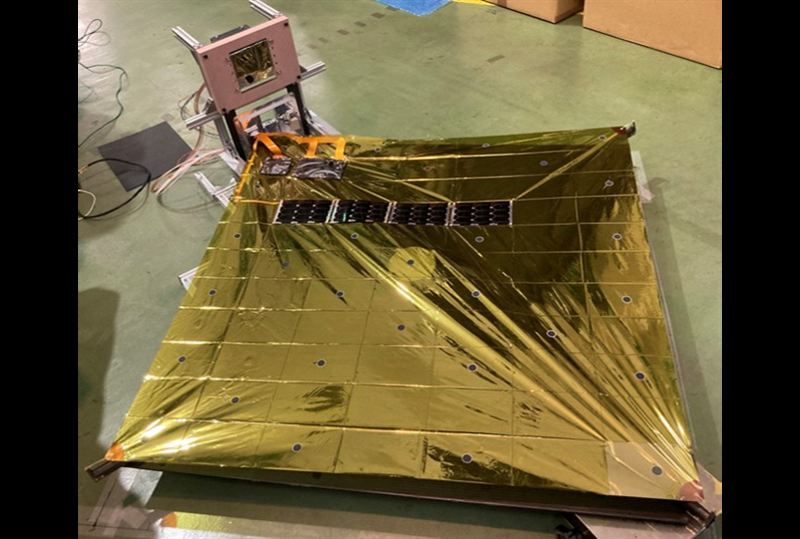
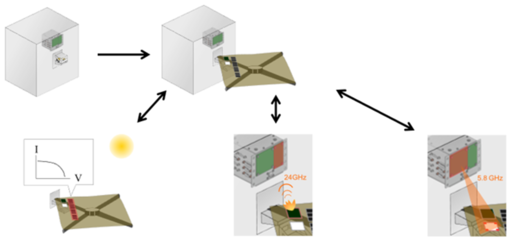
- ブームによる四角形膜展開(一辺1m)
- 太陽電池膜による発電(世界最高性能:200W/kg)
- 膜上5Gアンテナによるビームフォーミング
- 膜上干渉計アンテナによる膜形状計測
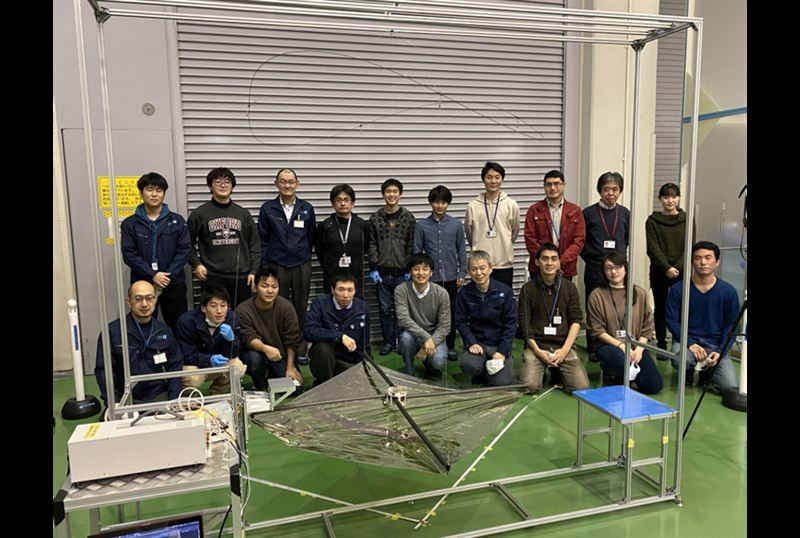
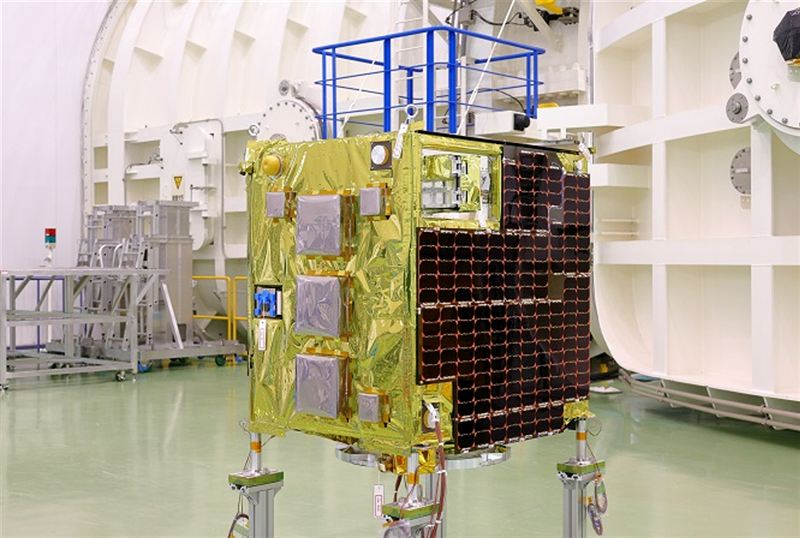
学生は,企業・他大学とも連携しつつJAXA教職員と協力し,主戦力として開発してきました.具体的な担当領域は,熱構造系・データ処理系・カメラ系・太陽電池特性測定系・膜展開解析・画像による膜形状推定などに及びます. HELIOSは,革新的衛星技術実証3号機に搭載され,イプシロンロケット6号機で打ち上げられましたが,打上げ失敗により,ミッションを実施できませんでした.その後,HELIOSはHELIOS-Rという新しいミッションとして受け継がれることになりました.
The lightweight membrane deployable structure HELIOS, which integrates power generation and antenna functions, has been developed under the leadership of our laboratory, with an on-orbit demonstration originally planned to begin in FY2022. This demonstration is expected to enable the following:
- Enhancing the capabilities and multifunctionality of small satellites
(High-power generation / High-capacity communications / High-resolution observation) - More capable communications and observation networks using constellations of small satellites
(advancing a data-driven society leveraging big data and AI) - Deep-space exploration enabled by small satellites
- Deployment of a quadrangular membrane (1 m per side) using booms
- Power generation using solar cell membranes (world's highest performance: 200 W/kg)
- 5G antenna beamforming on the membrane
- Membrane shape measurement using interferometric antennas on the membrane
Students have served as core contributors, working with JAXA researchers and staff in collaboration with industry and other universities. Their contributions span the thermal structural subsystem, command and data handling subsystem, camera subsystem, solar cell characterization subsystem, membrane deployment analysis, and image-based membrane shape estimation. HELIOS was mounted JAXA’s RApid Innovative payload demonstration SatellitE-3 (RAISE-3) and launched aboard Epsilon Launch Vehicle No. 6; however, due to the launch failure, the mission could not be conducted. HELIOS has since been carried forward as a new mission called HELIOS-R.